
 EN


+86 189 4436 0203



 EN
Water-Based Printing Is Becoming the Standard for Green Decorative Film — Here Is Why
Oct.21, 2026
News Summary
● From solvent to water-based ink: what changed. Modern pigment dispersion and encapsulation allow high-definition wood and marble patterns to be printed with water-based inks, cutting VOC emissions by more than 90% compared with solvent systems.
● Indoor air quality and green building certification. Lower VOCs mean safer installations in occupied hotels, hospitals and apartments, and support for green building certificates such as LEED and BREEAM.
● No trade-off in print quality or durability. Water-based films now reach the same color density, scratch resistance and embossed texture as solvent-printed products, while passing stricter indoor-air and export-market tests.
Specific Content
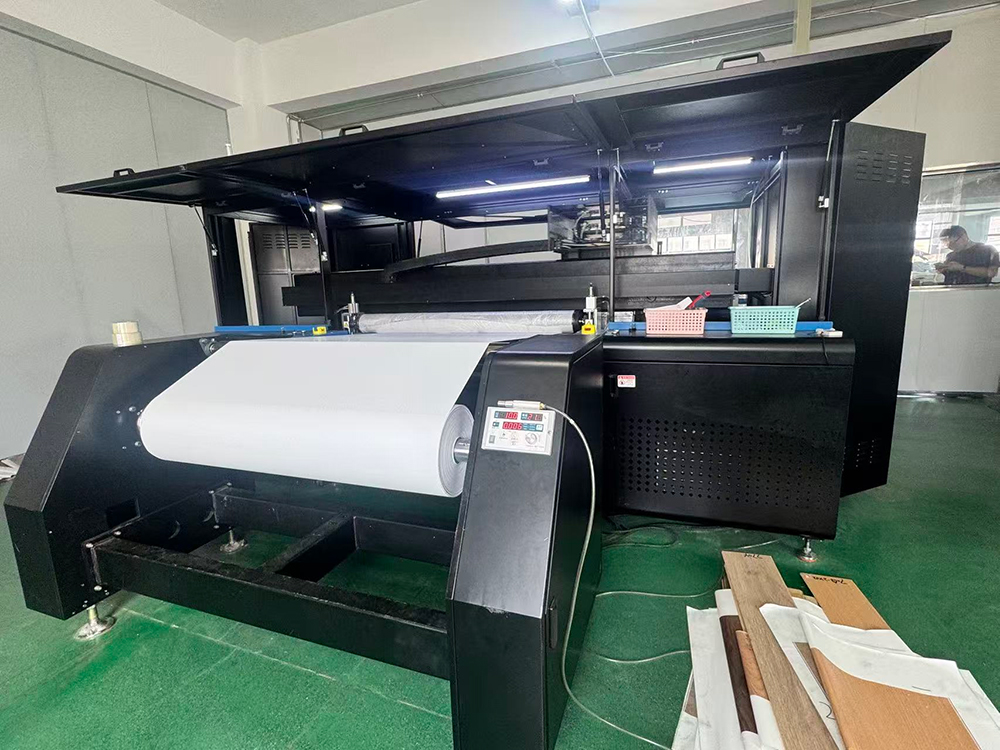
For decades, decorative film was printed with solvent-based inks. The result was vivid, but the process released large amounts of volatile organic compounds into the air during production and, to a lesser extent, after installation. That trade-off is now over. Recent advances in water-based pigment dispersion, ink adhesion and post-print coating allow digital printing lines to produce wood-grain, marble and cement films with color density, sharpness and scratch performance that match solvent-printed equivalents — while reducing VOC emissions by over 90% at the source.
The shift is being driven by buyers as much as by regulation. Large hotel groups, furniture brands and distributors in the EU, North America and the Middle East increasingly require formaldehyde, VOC and heavy-metal test reports for every shipment. Films for indoor wall panels and wardrobes must also comply with indoor air quality standards such as CARB, E0 and French A+ labeling. A water-based production line is no longer a marketing claim — it is the baseline requirement for exporting into mature markets.
The environmental benefit goes beyond the factory floor. Because water-based film is low-odor during lamination, it can be installed in occupied buildings with shorter ventilation periods, reducing project downtime. It also fits naturally with the circular ambitions of furniture makers: lightweight film-faced panels are easier to transport, repair on site and recycle than stone or solid wood, and the film itself can be supplied on PET or PP substrates that are easier to separate than multi-layer laminates.
YARATEK invested in water-based digital printing lines early, and every decorative film we export is produced with water-based inks, backed by third-party VOC, formaldehyde and heavy-metal test reports. We treat green processing not as a premium surcharge but as the default — so our customers can confidently specify YARATEK films for eco-labeled hotel, residential and commercial projects anywhere in the world.

